Evidence or Coercion? The Birth Truth Tool for Doulas™
Regular Price: $79
Today's Price: $39
Doula, you've heard it.
"Your placenta is aging."
"Your baby isn't tolerating labor."
"We just want to make sure everyone goes home healthy."
It sounds medical. It sounds urgent. It sounds like truth.
But a lot of the time sadly, it isn't.
And in that moment, you're expected to know the difference.
You can feel it when something is off.
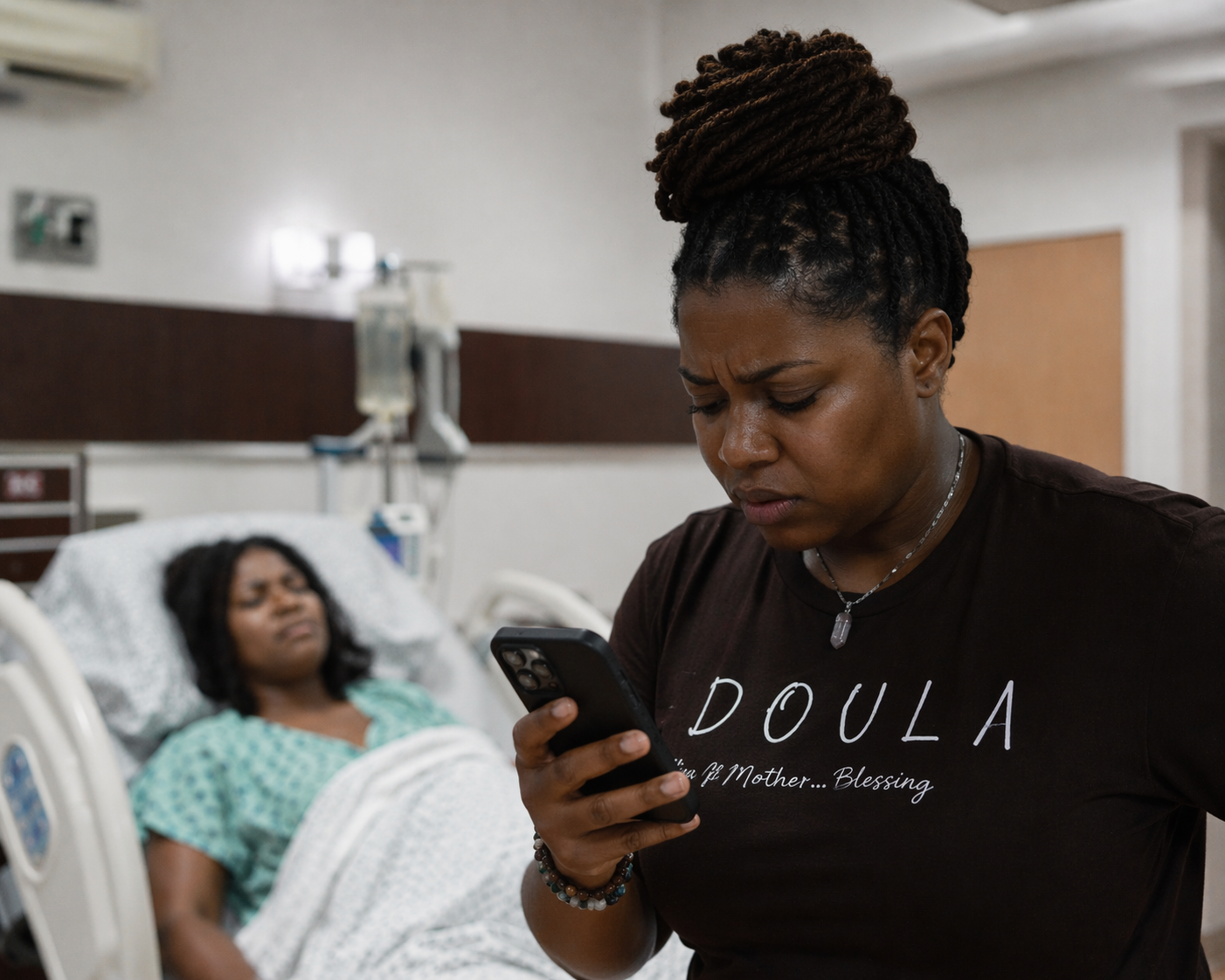
There's a moment, and if you've been in a birth space, you know this moment, when the doctor walks in and says something and the entire vibe in the room changes.
Your client suddenly looks worried and you can feel their fear from across the room. What the provider is saying sounds real. Sounds clinical. Sounds urgent.
But something is nagging you.
What if I'm wrong?
I don't even know what part of this feels off.
The practitioner is the expert here.
What do I even say?
I don't want to damage this working relationship.
And so you go quiet or you soften it... Or worse, you agree with the provider when your client looks up at you with terrified eyes.
Later, on the way home, you replay that moment.
Was that true?
Was that necessary?
Could I have said something?
Did I fail my client?
We know the medical system is not serving birth. The outcomes have never been worse. And it's so hard to find the moments where the harm is happening...and harder still to know how to stop it for your clients.
So you carry that weight. And the distrust builds, birth after birth. But it feels so risky to say something when you're scared of being responsible for something going wrong.
You care so deeply. And you've been caught in this cycle without knowing how to break it.
Now you do.
How it works:
Hear it. Check it. Say it.
1. Hear it
A provider says something that doesn't sit right.
2. Check it
Type exactly what they said into the tool or tap the closest topic button.
3. Understand it
See instantly whether it's evidence-based or a pressure tactic, with citations from your country's own guidelines.
4. Say it
Use ready-made scripts to respond to the provider, support your client, or slow the room down.
Here's What it Looks Like in the Room:
Example 1
You hear:
"Your baby isn't tolerating labour."
The tool tells you: this phrase has no clinical information in it. "Baby isn't tolerating" should come with an exact fetal heart rate category, a specific strip pattern, and a timeframe. Without those numbers, this is not a clinical statement — it's a fear tactic. BMC Pregnancy (Reed et al. 2017) identified this exact type of language as a core theme in birth trauma descriptions.
You say:
"Can you give us the exact heart rate category and the specific pattern you're seeing?"
"What is the clinical threshold for that finding — and where is my client relative to it?"
Example 2
You hear:
"I can't deliver the baby from there."
The tool tells you: this is factually inaccurate in the vast majority of cases. Providers can and do deliver in hands-and-knees, side-lying, and squatting positions. The Cochrane review (Gupta et al. 2017, 9,000+ participants) found upright and lateral positions result in fewer episiotomies, fewer instrumental deliveries, and less perineal trauma. The provider can move to the birthing person — including getting on the floor. The birthing person does not move around the provider.
You say:
"The birthing person can be in any position they choose. Can you get to a level that works for you from there?"
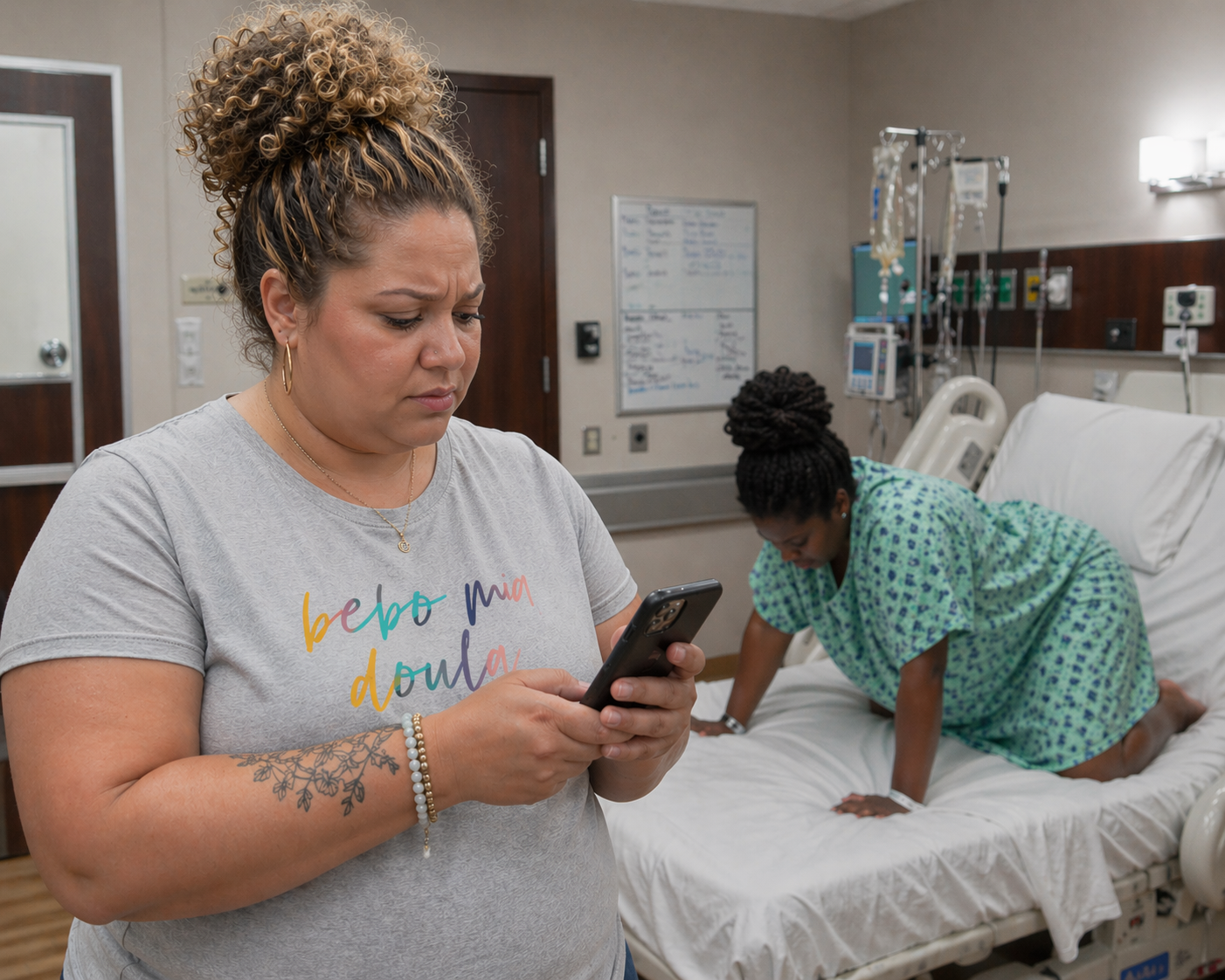
You're not flipping through notes. You're not trying to remember a training. You're not googling in the bathroom.
You have it right there.
What's Included:
Everything you need. Nothing you don't.
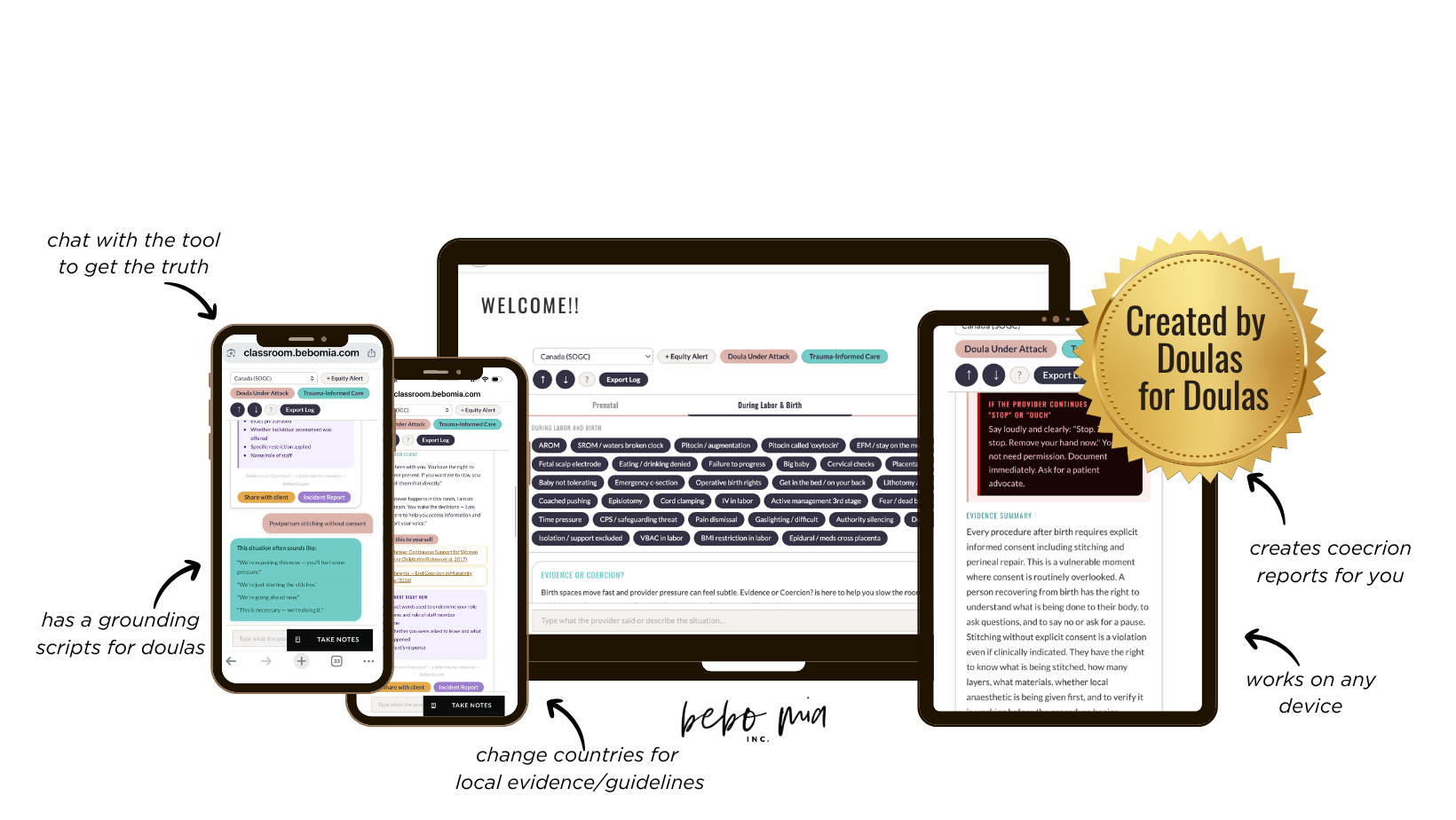
50+ topic buttons: prenatal, labor and birth, after birth, and newborn consent
Type what the provider said & the tool identifies the coercion pattern and the level
Four alert levels from subtle ethical fading to extreme psychological coercion
Evidence summaries with citations from your country's guidelines: Canada (SOGC), US (ACOG), UK (NICE/RCOG), Australia (RANZCOG), or International (WHO)
Scripts for providers and scripts for clients written in they/their/them throughout
Trauma-informed guidance built into every relevant response because we assume everyone walking into a birth space has a trauma history
Equity lens: 11 identity and experience tags including BIPOC, Indigenous, Trans/Non-binary, Fat/Plus-size, Neurodivergent, and more
Doula Under Attack for when a provider is undermining your role or asking you to leave
Incident Report: documents exactly what happened and who to contact in your jurisdiction
Export Log: timestamped record of every session you can save after each birth
Works on desktop, laptop, and tablet... no app, no download and works offline
Peace of mind that you are always doing the best care for your clients
Who's it for?
Birth and postpartum doulas who want to support their clients with trauma informed and evidence-based care.
I highly recommend “Evidence or Coercion?” by Bebo Mia as a valuable addition to any birth doula’s toolkit. This thoughtful and practical resource offers clear, evidence‑based information alongside useful, respectful language that can be shared with clients to help them ask specific questions of medical providers in real time.

Bonuses
This is the lowest the Evidence or Coercion? The Birth Truth Tool for Doulas™ will ever be. Beta access means you get the full tool, the bonus advocacy card, and a price that reflects that you're getting in early. When beta closes, it goes up and stays there.
Limited-time bonus: In-the-Moment Advocacy Card
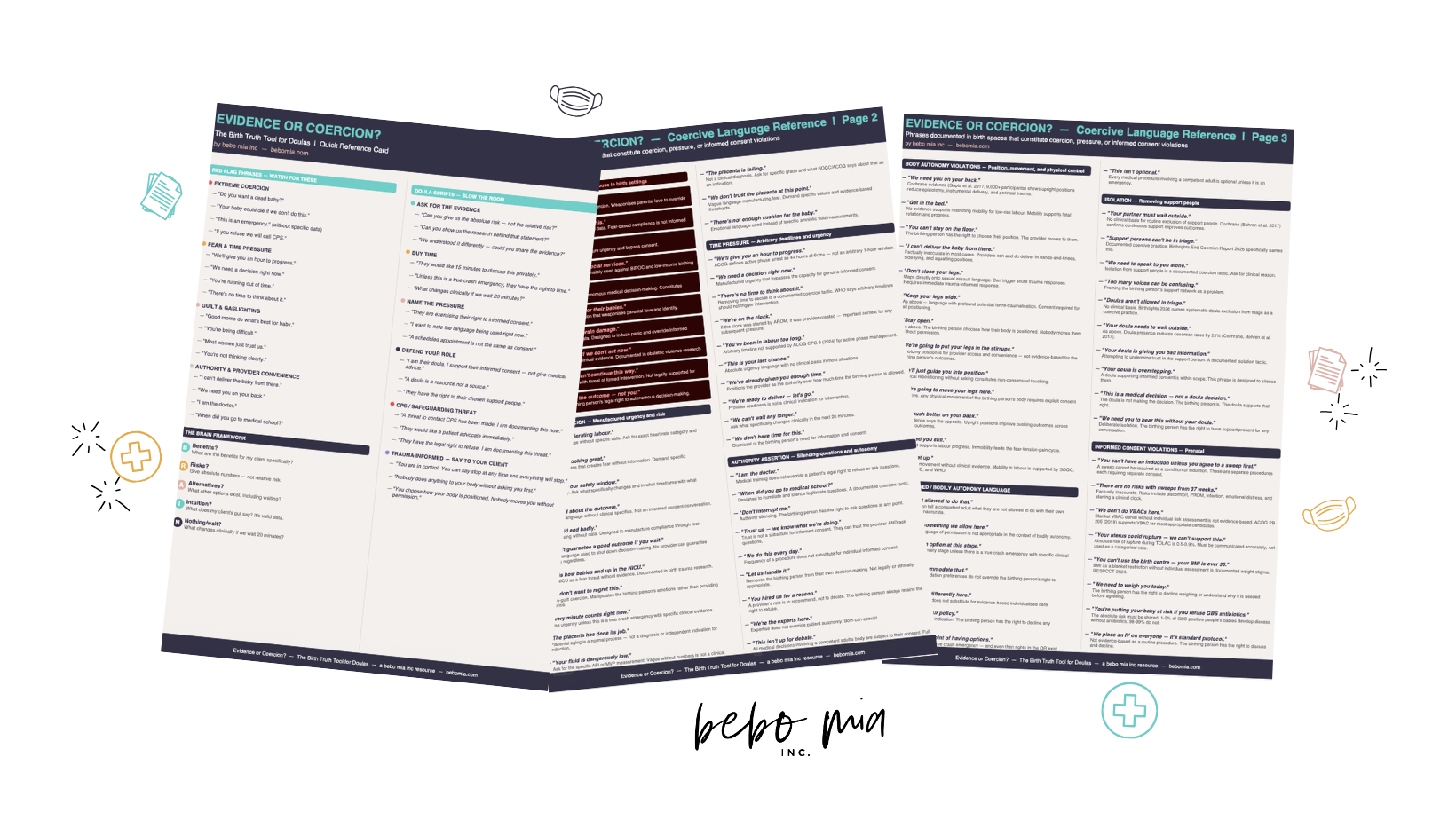
A printable three-page reference for your birth bag: 130+ documented coercive phrases, the BRAIN framework, and ready-made scripts.
Take it into your next birth. If you don't feel more confident in the room — email us and we'll refund you. No questions. No hoops. We believe in this tool.